When a cat returns home after surgery, a comfortable and carefully prepared recovery area can make a meaningful difference in their healing experience. Cats often prefer quiet, familiar surroundings where they can rest without interruptions. Creating a safe recovery space helps reduce stress, limits unnecessary movement, and allows pet parents to monitor their cat during the healing process.
For families in South Burlington, understanding how to prepare for recovery is an important part of planning for cat surgery. Whether a cat has undergone a routine procedure or a more involved operation, the home environment should support the veterinarian’s instructions. With guidance from Dorset Street Animal Hospital, pet parents can prepare a space that encourages rest while helping them recognize changes that may require veterinary attention.
Why Does Your Cat Need a Dedicated Recovery Space?
Cats may appear eager to explore soon after returning home, even when their bodies still need time to heal. Jumping onto furniture, climbing cat trees, running through hallways, or playing with other pets can place unwanted pressure on healing tissues. Some cats may also feel unsettled because of anesthesia, discomfort, or changes in their usual routine.
A dedicated recovery space helps limit these risks. It gives your cat a predictable place to sleep, eat, drink, and use the litter box without navigating a busy household. It also makes it easier to observe appetite, bathroom habits, mobility, and incision appearance.
The required level of restriction depends on the procedure performed and your veterinarian’s recommendations. Cats recovering from certain operations may need strict activity limitations for several days or longer. Always follow the discharge instructions provided for your individual cat.
Choose a Quiet and Comfortable Location
Start by selecting a room where your cat can rest without frequent interruptions. A spare bedroom, quiet office, or other secure indoor space may work well. Choose an area away from loud televisions, busy walkways, and doors that open frequently.
Keep the room at a comfortable temperature and provide soft, clean bedding. A familiar blanket can help your cat feel more secure, provided it is clean and does not catch on the incision or medical equipment. Washable bedding is especially useful if your cat experiences nausea or has an accident during recovery.
Avoid placing the recovery area near stairs or furniture that encourages climbing. Close access to shelves, windowsills, and elevated sleeping spots. If your cat usually sleeps on a high bed, offer a comfortable alternative at floor level.
For multi-pet households, separate the recovering cat from other animals when necessary. Even friendly pets may encourage chasing, wrestling, or unwanted grooming. Children should also understand that a recovering cat needs gentle handling and uninterrupted rest.
Prepare a Safe, Low-Movement Layout
The arrangement of the room matters just as much as the location. Place essential items within easy reach so your cat does not need to walk far or jump over obstacles.
Include the following supplies:
- A low-sided litter box that is easy to enter and exit, if suitable for your cat’s mobility and procedure.
- Fresh water in a stable bowl that cannot tip easily.
- Food dishes positioned away from the litter box.
- A supportive resting area with clean bedding.
- Any veterinarian-approved recovery supplies, including prescribed medications.
- A properly fitted carrier nearby for follow-up visits.
Keep floors clear of cords, loose objects, slippery rugs, and small items that could cause a fall. If your cat is unsteady after anesthesia, a non-slip surface can provide better footing. Avoid rearranging the room repeatedly once your cat has settled.
Do not add ramps, steps, or other equipment unless they are safe for your cat and appropriate for the procedure. Some cats benefit from easier access to essential items, while others need a very restricted space to prevent movement.
Make Food, Water, and Litter Accessible
Eating and drinking habits may change temporarily after surgery. Anesthesia, medication, stress, and the procedure itself can affect appetite or cause mild nausea. Follow the discharge instructions regarding when to offer food and water, how much to provide, and whether your cat needs a special diet.
Once feeding is permitted, offer the recommended amount in a quiet setting. Do not force your cat to eat or drink unless your veterinarian has specifically instructed you to do so. Contact the veterinary team if your cat refuses food or water for longer than the advised period, repeatedly vomits, or seems increasingly weak.
Litter box access also deserves attention. A box with a low entrance may help a cat that is sore or reluctant to step over a high edge. However, some procedures require specific litter or restrictions to keep the surgical site clean. Use the type recommended by your veterinarian rather than making assumptions.
Monitor urination and bowel movements. Difficulty urinating, repeated unsuccessful trips to the litter box, or obvious straining should be discussed with a veterinarian promptly.
Manage Incision Care and Recovery Supplies
Before your cat arrives home, organize the supplies recommended for post-operative care. Depending on the procedure, these may include prescribed medication, clean bedding, an approved protective collar, and written discharge instructions.
Check the incision as directed by your veterinarian. Mild bruising or slight swelling may occur after some procedures, but the expected appearance varies. Increasing redness, worsening swelling, discharge, an unpleasant odor, bleeding, or an opening in the incision needs veterinary guidance.
Keep the surgical site dry and clean according to the care instructions. Do not apply ointments, disinfectants, powders, or home remedies unless your veterinarian approves them. Avoid bathing your cat until the veterinary team confirms it is safe.
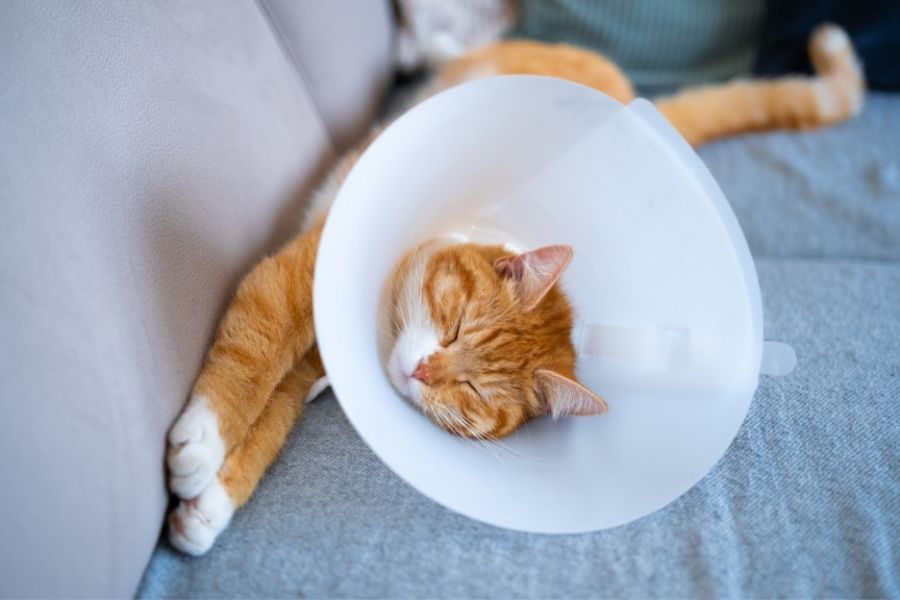
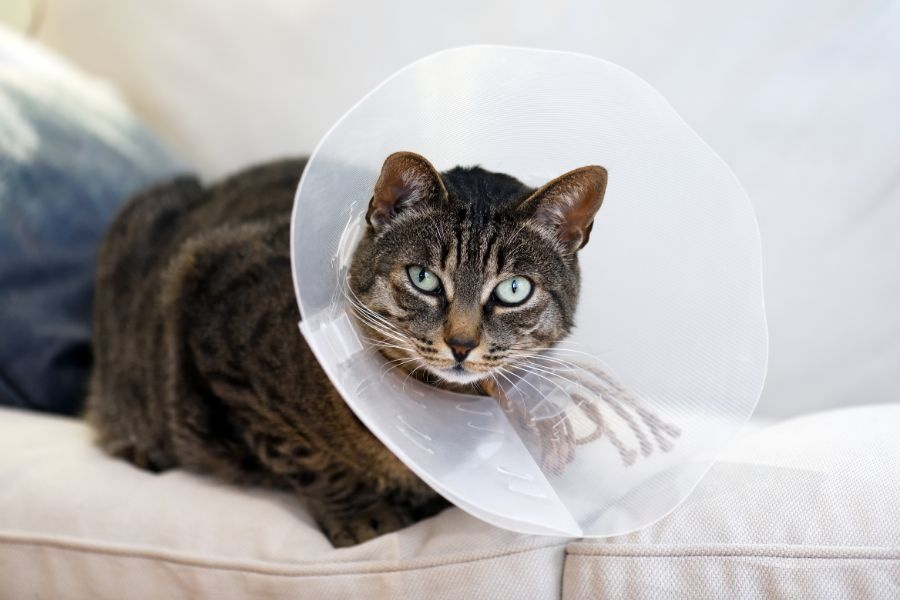
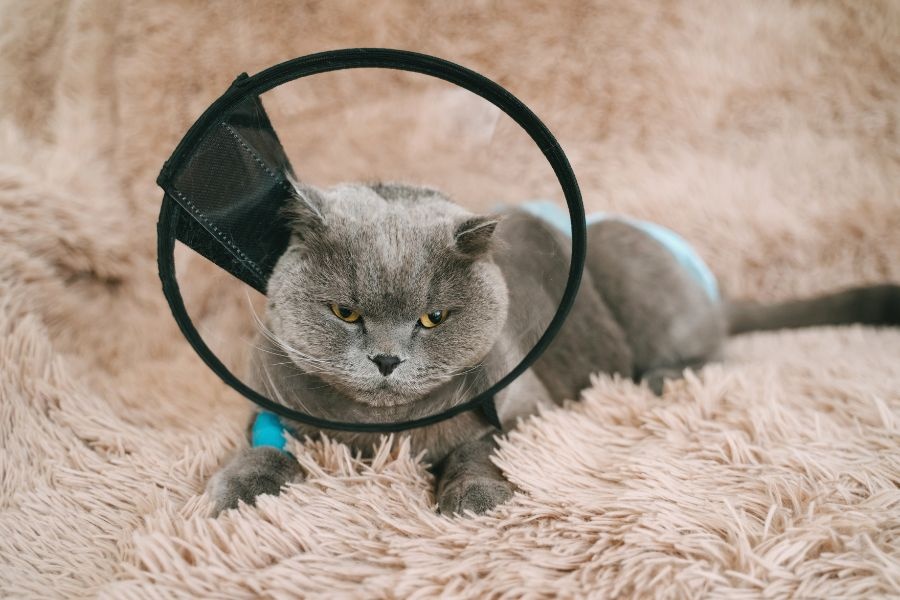
Prevent licking and chewing at the incision. Your veterinarian may recommend an Elizabethan collar or a suitable recovery garment. Check that the protective device fits correctly and does not prevent your cat from breathing, eating, drinking, or resting comfortably. Ask the veterinary team for help if your cat repeatedly removes it or cannot manage normal activities while wearing it.
Follow Medication and Activity Instructions Carefully
Medication schedules are an essential part of recovery. Give prescribed medicines exactly as directed, using the recommended dose and timing. Never give human pain relievers or leftover medication intended for another animal, because some products can be dangerous to cats.
If your cat spits out a dose, vomits after receiving medication, or develops unusual behavior, contact your veterinarian before repeating the dose or changing the schedule. A written medication chart can help household members avoid missed or duplicated doses.
Activity restrictions are equally important. Do not assume that a cat who is walking normally is ready to resume jumping or vigorous play. Keep climbing structures inaccessible and use calm interaction instead of energetic games. Follow the veterinarian’s guidance on when to gradually restore normal activity.
The recovery period varies according to the operation, your cat’s health, and the healing progress. Veterinary follow-up visits allow the team to assess recovery and advise when restrictions can be relaxed.
Reduce Stress Through Familiar Routines
A quiet environment can help cats feel secure after a medical procedure. Use a calm voice, move slowly, and let your cat choose when to approach you, provided their medical needs are being met. Avoid inviting visitors to meet the recovering cat or frequently picking them up for reassurance.
Keep familiar items nearby when appropriate, such as a favorite blanket or a safe toy that does not encourage running or jumping. Maintain predictable feeding and medication routines, adjusting them to the discharge instructions.
Some hiding is normal for cats experiencing stress, but do not overlook significant changes. Persistent withdrawal, unusual aggression, continuous vocalization, or an inability to settle may indicate discomfort or another concern. Contact your veterinarian if your cat’s behavior worries you or seems to be worsening.
Know When to Contact Your Veterinarian
Home care is an important part of veterinary surgery, but it does not replace professional monitoring. Contact your veterinary team if your cat experiences persistent vomiting, worsening pain, unusual weakness, refusal to eat beyond the advised timeframe, or changes in breathing or responsiveness.
Seek prompt veterinary attention for significant bleeding, an incision that opens, difficulty breathing, collapse, or repeated attempts to urinate without producing urine. Do not wait for a scheduled follow-up if a serious concern develops.
Dorset Street Animal Hospital can help pet parents understand post-operative instructions, medication questions, activity restrictions, and signs that need assessment. Clear communication helps you make informed decisions throughout your cat’s recovery.
Prepare Your Cat’s Recovery Space Before Surgery
Planning ahead makes it easier to focus on your cat once they return home. Set up the room, arrange essential supplies, review medication instructions, and make sure other household members understand the recovery rules. Write down your veterinarian’s contact information and the recommended follow-up schedule.
Thoughtful preparation supports the goals of pet surgical services by helping cats rest safely and giving pet parents a practical way to monitor healing. Every cat and procedure is different, so personalize the space according to professional advice rather than relying on a one-size-fits-all checklist.
Schedule a Consultation With Dorset Street Animal Hospital
Preparing for cat surgery involves more than getting ready for the procedure itself. A suitable recovery area, clear instructions, and a plan for follow-up care can help make the transition home more comfortable for your cat.
If your cat is scheduled for surgery or you have questions about recovery, contact Dorset Street Animal Hospital in South Burlington. Speak with the veterinary team about preparing your home, managing prescribed medications, limiting activity, and caring for the incision. Schedule an appointment or consultation to discuss your cat’s individual needs and understand what to expect before bringing them home.
Frequently Asked Questions
Q1. How long should I keep my cat in a separate recovery room after surgery?
Ans: The duration depends on the procedure, your cat’s condition, and the veterinarian’s instructions. Keep your cat in a secure, quiet area until the veterinary team confirms that activity can gradually increase.
Q2. Should I let my cat sleep in my bed while recovering from surgery?
Ans: A floor-level sleeping area is generally safer during early recovery because jumping onto or off a bed can strain healing tissues. Follow your veterinarian’s activity restrictions and provide a comfortable alternative nearby.
Q3. What should I do if my cat keeps trying to lick the incision?
Ans: Use the protective collar or recovery garment recommended by your veterinarian. Do not apply unapproved products to the incision. Contact the veterinary team if your cat continues reaching the surgical site or the protective device fits poorly.
Q4. Is it normal for my cat to hide after returning home from surgery?
Ans: Some cats hide because they feel tired, stressed, or uncomfortable after a procedure. Provide a quiet space and monitor their condition. Contact your veterinarian if hiding persists alongside worsening discomfort, unusual weakness, breathing changes, or other concerning symptoms.
Q5. When can my cat return to normal play and jumping?
Ans: Your cat should resume normal activity only when the veterinarian advises it is safe. Healing times vary, and returning to jumping or energetic play too early can interfere with recovery. Attend recommended follow-up appointments before relaxing activity restrictions.