

Understanding Your Pet’s Health
When your pet is sick or injured, they can’t tell us what’s wrong. That’s why a comprehensive physical examination and a detailed medical history—based on the symptoms you’ve observed at home—are essential first steps. If the cause of illness is not immediately apparent during the initial assessment, your veterinarian may recommend specific diagnostic tests to identify the underlying issue and guide effective treatment.

Laboratory Testing
Our veterinary laboratory services provide valuable insights into your pet’s overall health and can detect underlying diseases or infections. Testing may include complete blood counts, organ function assessments, and infectious disease screenings.
Depending on your pet’s condition, samples of blood or urine may be collected for:
- In-house (point-of-care) testing provides rapid results and allows for immediate treatment decisions.
- Reference laboratory testing, which involves sending samples to specialized facilities for more advanced analyses or when results are not urgently required.
This combination of on-site and off-site testing ensures both efficiency and accuracy in every diagnostic evaluation.
Diagnostic Imaging
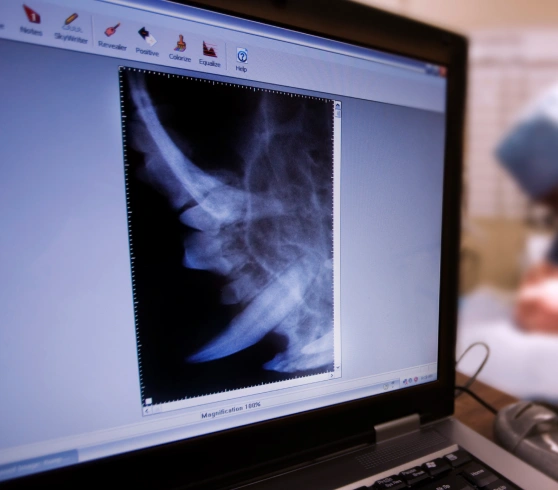
Our hospital is equipped with advanced imaging technology, including digital X-rays and ultrasound, which enable our veterinarians to examine your pet’s internal organs and structures in detail. These diagnostic tools help detect and evaluate conditions such as:
- Heart and lung disease
- Gastrointestinal blockages
- Tumors or abnormal growths
- Fluid accumulation in the chest or abdomen
- Urinary or gallstones
- Orthopedic and joint disorders
Most pets tolerate these imaging procedures with gentle restraint; however, mild sedation may be recommended to ensure your pet’s comfort and the highest-quality images.

Microscopic Evaluation
Microscopy is a valuable diagnostic tool for identifying skin, ear, and cellular abnormalities. By examining samples such as ear swabs, skin impressions, or fine-needle biopsies under a microscope, our veterinarians can detect infections, parasites, and other conditions affecting the skin and ears.
Ocular (Eye) Testing
Some eye conditions require specialized diagnostic testing to ensure accurate evaluation and treatment. Our ocular diagnostic services may include:
- Schirmer Tear Test – to measure tear production levels
- Fluorescein Stain – to detect corneal scratches, ulcers, or injuries
- Tonometry – to measure intraocular pressure and screen for glaucoma
These tests are essential for identifying eye problems early and preserving your pet’s vision.
Importance of Diagnostic Testing
Accurate diagnosis is the foundation of effective veterinary care. Diagnostic testing allows our veterinarians to identify the cause of your pet’s symptoms and develop a precise, targeted treatment plan. Your veterinarian will explain the purpose of each recommended test and help prioritize the most beneficial options for your pet’s specific situation.
Walk-In for Prompt, Compassionate Care
Prompt diagnostic care is key to maintaining your pet’s health and achieving the best possible outcome.
At Dorset Street Animal Hospital, our dedicated veterinary team provides:
- Comprehensive physical examinations and medical history reviews
- Advanced laboratory and imaging diagnostics
- Specialized microscopic and ocular evaluations
- Clear communication and personalized treatment recommendations
Protect your pet’s health and gain peace of mind—call (802) 221-3090 or visit Dorset Street Animal Hospital today to schedule your diagnostic appointment.